

 |
|---|
 |
 |
 |
 |
 |
 |
 |
 |
 |
 |
 |
 |
 |
 |
 |
 |
 |
 |
 |
 |
 |
 |
 |
 |
 |
 |
 |
 |
 |
 |
 |
 |
 |
 |
 |
 |
|
 |
 |
 |
 |
|
|
 |
|

October 01, 2026 • 12 Pages • Volume 24 • Issue 03
Celebrating 23 Years 2002 - 2026
From Petition To Final Approval: Understanding The Family-Based Visa Process
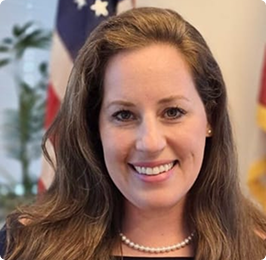
By Mary Wilkowski
Oct 1, 2026
This Article Is Part III Of A Series On Family-Based Immigration To The United States.
For many families, obtaining a green card is an important step toward building a permanent life together in the United States. Although every immigration case has its own unique circumstances, all family-based green card cases begin at the same place: establishing that a qualifying family relationship exists.
What is Form I-130?
A qualifying U.S. citizen or lawful permanent resident begins the process by filing Form I-130, Petition for Alien Relative, with U.S. Citizenship and Immigration Services (USCIS). Form I-130 is used regardless of whether the petitioner is an immediate relative or falls within a family preference category.
The purpose of the I-130 is to establish the qualifying family relationship between the person filing the petition, known as the petitioner, and the relative seeking permanent residence, known as the beneficiary. Evidence establishing the qualifying relationship must also accompany the petition, such as documentation proving a current marriage and termination of any prior marriages.
Does an approved Form I-130 result in a green card?
Approval of an I-130 alone does not entitle the beneficiary to a green card or grant permission to immigrate to the United States. Once an I-130 is approved and the family relationship is established, the green card process generally proceeds along one of two paths: Adjustment of Status in the United States, or Consular Processing abroad.
How long does it take for Form I-130 to be approved?
USCIS is currently reporting a historical national median of approximately 12.9 months for immediate-relative Form I-130 petitions (those filed by the spouse, parent, or unmarried child under 21). USCIS does not publish national averages for the time it takes to adjudicate Form I-130 based on a family preference category, but in practice it can often take anywhere from a few to several years.
What is Adjustment of Status?
Adjustment of Status allows an eligible person who is physically present in the United States to apply to USCIS for permanent residence. In other words, Adjustment of Status is the legal process used by qualifying foreign nationals already present in the U.S. to apply for lawful permanent resident status without having to return to their home country.
Who qualifies for Adjustment of Status?
Simply being in the United States does not necessarily mean an applicant qualifies to adjust status. Eligibility depends on the foreign national’s particular circumstances, including, but not limited to, applicable statutory requirements and whether an immigrant visa is immediately available when required. Issues such as how the person entered the United States (for example, whether they were inspected and admitted or paroled into the country), maintenance of immigration status, immigration violations, and the applicable family category can affect eligibility.
What is Form I-485?
The principal application to adjust status is Form I-485, Application to Register Permanent Residence or Adjust Status. This form essentially asks USCIS to adjust an applicant’s immigration status (usually from a temporary visa) to a lawful permanent resident without having to leave the country.
An adjustment application may involve several additional forms, including, but not limited to: Form I-864, Affidavit of Support; Form I-693 for the required immigration medical examination and vaccination record; and, when eligible, optional applications for employment authorization (Form I-765) and a travel document (Form I-131). The required forms vary from case to case and depend on the applicant’s specific circumstances.
How long does it take for Form I-485 to be approved?
USCIS is currently reporting a historical national median of approximately 5.9 months for both immediate-relative and family preference category Form I-485 petitions. However, Form I-485 cannot be filed until a visa is available. Premium processing (an expedited service offered by USCIS for a fee that guarantees a faster review) is not available for Adjustment of Status.
Immediate relatives have an important procedural advantage in this regard. Because immigrant visas are immediately available to immediate relatives without quotas or backlogs, they are generally permitted to file the Form I-130 and Form I-485 together. This is known as concurrent filing, and can significantly reduce the time it takes for an application to adjust status to be adjudicated.
Family preference beneficiaries do not have this option and must wait until an immigrant visa is available before filing Form I-485. Due to numerical quotas and backlogs, wait times can last months or years depending on the family preference category.
Will USCIS conduct an interview?
In an Adjustment of Status case USCIS will schedule a biometrics appointment to take fingerprints, a photograph, and a digital signature. Interviews are typically conducted, but not always.
If USCIS does schedule an interview, at the interview the USCIS officer will review the application with the applicant and examine documentation establishing the family relationship as well as general admissibility/eligibility. They may also ask questions to confirm both topics (the family relationship and general admissibility/eligibility).
What happens if an I-485 is approved?
If USCIS approves the I-485, the applicant becomes a lawful permanent resident and will receive a green card. If the beneficiary is the spouse of a U.S. citizen and has been married for less than 2 years, the beneficiary will be granted conditional permanent residence and receive a conditional green card that is valid for 2 years. The beneficiary must later file Form I-751 to remove conditions to become a lawful permanent resident and receive green card that is valid for 10 years.
What is Consular Processing?
For beneficiaries pursuing permanent residence from outside the United States, the case generally proceeds through Consular Processing. After USCIS approves an I-130 designated for consular processing, the case is generally forwarded to the Department of State's National Visa Center (NVC). The NVC handles pre-interview processing, including collecting fees and required documentation.
What is Form DS-260?
Unlike Adjustment of Status applicants, foreign nationals who choose Consular Processing do not file Form I-485. Instead, the beneficiary electronically completes Form DS-260, Immigrant Visa and Alien Registration Application. The process generally also involves submitting an Affidavit of Support and financial evidence, civil documents, and an immigration medical examination with an authorized panel physician.
How long does it take for Form DS-260 to be processed?
First the NVC must determine that an application package (Form DS-260 and supporting materials) is complete. There is no set time for that to occur, but it usually takes a few weeks from the date of submission and may take longer if the NVC requests additional documentation.
What happens after Form DS-260 is processed?
Once the NVC determines the package is sufficient, it will then forward the package on to the U.S. Embassy or Consulate in the beneficiary’s home country for processing. From there, timing is highly dependent upon the specific Embassy or Consulate handling the application, as well as other factors including advancement/retrogression of the wait lists (per the visa bulletin) for family preference cases. Some Embassies and Consulates take longer than others, and other factors can also affect timing significantly.
Will there be an interview?
For Consular Processing cases, yes. Once the documentary requirements have been satisfied and a visa is available, the beneficiary will be scheduled for an immigrant visa interview at a U.S. Embassy or Consulate in their home country. The Consular Officer will review the application, examine documentation establishing the family relationship, and ask questions to confirm the family relationship.
What happens if the Immigrant Visa application is approved?
If the case is approved and an immigrant visa is issued, the beneficiary may use it to travel to the United States. Upon the initial admission with the immigrant visa, the individual will either become a conditional permanent resident or a lawful permanent resident. Again, conditional permanent residence expires after 2 years, and a Form I-751 must be filed to remove conditions in order to obtain lawful permanent resident status.
Understanding the Adjustment of Status, Immigrant Visa application, and interview process is critical for the immigration process. Careful preparation and thorough documentation are important components of a successful process. Consulting an immigration attorney can help families understand the available options, identify potential complications and approach the process with greater confidence.
At Polatsek, Boheme & Wilkowski, we guide families, individuals, and businesses through U.S. immigration with a single goal: making your next step clear and achievable.
About the Author: Mary Wilkowski is an immigration attorney and partner at Polatsek, Boheme & Wilkowski. The firm advises employers and families on work visas, PERM labor certification, and permanent residence under U.S. immigration law. The firm’s attorneys provide guidance on H-1B sponsorship, employment-based green cards, investor visas, and family immigration matters.
Mary can be reached at: (954) 566-0377. Or: clientservices@polatsek.law.
Polatsek, Boheme & Wilkowski
500 West Cypress Creek Road, Suite 650
Fort Lauderdale, Florida 33309
This article includes general information only that is intended to help consumers learn about the legal system. It does not constitute legal advice and must not be relied upon or used as a substitute for the counsel and services provided by a licensed attorney. You should refrain from acting on the basis of this information alone without seeking legal advice from a qualified attorney.